Course description

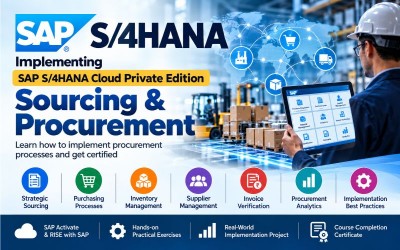
Implementing SAP S/4HANA Cloud Private Edition, Sourcing and Procurement is a comprehensive enterprise-level training program designed for procurement professionals, SAP consultants, purchasing specialists, inventory managers, and implementation partners who want to master end-to-end procurement processes in SAP S/4HANA Cloud Private Edition.

This course provides practical knowledge of procurement lifecycle management, sourcing, purchasing, inventory management, invoice verification, material requirements planning, consumption-based planning, supplier management, procurement analytics, SAP Activate implementation methodology, and RISE with SAP. Learners will gain hands-on experience configuring procurement processes, managing purchasing documents, optimizing inventory, executing invoice verification, and implementing SAP Best Practices using SAP S/4HANA Cloud Private Edition.

Following SAP's official Learning Journey, the course progresses from procurement fundamentals through advanced sourcing, purchasing, inventory management, invoice verification, materials management customization, and implementation methodology.

Digital procurement has become one of the most strategic business functions in modern enterprises. SAP S/4HANA Cloud Private Edition provides organizations with intelligent procurement capabilities that streamline sourcing, purchasing, inventory management, supplier collaboration, invoice verification, and procurement analytics while integrating seamlessly with finance, warehouse management, manufacturing, and supply chain operations.

This comprehensive course introduces learners to the complete procurement lifecycle within SAP S/4HANA Cloud Private Edition. Participants will learn how to configure procurement master data, manage purchasing processes, execute consumption-based planning, perform inventory management, process logistics invoice verification, configure Materials Management (MM), and implement procurement solutions using SAP Activate and RISE with SAP.

Throughout the course, learners will gain practical experience working with SAP Fiori applications, procurement workflows, purchasing documents, inventory transactions, forecasting, supplier evaluation, procurement reporting, and enterprise implementation scenarios.

By the end of this training, participants will possess the technical and functional expertise required to implement, configure, support, and optimize SAP S/4HANA Cloud Private Edition Sourcing and Procurement solutions across enterprise environments.

Who Should Attend

  • SAP Sourcing & Procurement Consultants
  • SAP MM Functional Consultants
  • SAP S/4HANA Consultants
  • Procurement Managers
  • Purchasing Officers
  • Buyers and Strategic Sourcing Professionals
  • Inventory Controllers
  • Warehouse Managers
  • Materials Management Professionals
  • Supply Chain Consultants
  • SAP Solution Architects
  • SAP Implementation Partners
  • Business Process Owners
  • ERP Consultants
  • Graduate Engineers and MBA Professionals interested in SAP Procurement

Skills You Will Gain

  • SAP S/4HANA Procurement
  • Purchasing Configuration
  • Strategic Sourcing
  • Procurement Lifecycle Management
  • Material Master Management
  • Supplier Master Management
  • Purchasing Info Records
  • Source Determination
  • Purchasing Optimization
  • Consumption-Based Planning
  • Forecasting
  • Inventory Management
  • Goods Movements
  • Physical Inventory
  • Logistics Invoice Verification
  • Materials Management Configuration
  • SAP Activate Methodology
  • RISE with SAP
  • SAP Fiori Procurement Applications
  • Procurement Analytics and Reporting

Career Opportunities

  • SAP MM Functional Consultant
  • SAP Procurement Consultant
  • SAP Sourcing Consultant
  • SAP Purchasing Consultant
  • SAP Supply Chain Consultant
  • SAP Materials Management Consultant
  • SAP S/4HANA Functional Consultant
  • Procurement Analyst
  • Strategic Sourcing Specialist
  • Purchasing Manager
  • Inventory Manager
  • Warehouse Management Consultant
  • ERP Functional Consultant
  • SAP Business Process Consultant
  • SAP Solution Architect (Procurement)

These roles are in demand across manufacturing, retail, pharmaceuticals, automotive, consumer goods, logistics, healthcare, energy, and public sector organizations.

Certification Preparation

This course is designed to support learners preparing for SAP S/4HANA Cloud Private Edition Sourcing and Procurement implementation certifications by covering the major functional topics included in SAP's official Learning Journey.

Participants will gain practical experience in:

  • Procurement Configuration
  • Purchasing
  • Consumption-Based Planning
  • Inventory Management
  • Invoice Verification
  • Materials Management Customizing
  • SAP Activate
  • RISE with SAP

The course combines conceptual understanding with hands-on implementation exercises to prepare learners for certification and real-world SAP consulting projects.

What will i learn?

  • Understand SAP S/4HANA Sourcing and Procurement architecture.
  • Configure procurement organizational structures.
  • Manage procurement master data.
  • Execute purchasing and sourcing processes.
  • Configure supplier management and purchasing optimization.
  • Perform consumption-based planning and forecasting.
  • Execute inventory management and physical inventory.
  • Process logistics invoice verification.
  • Configure Materials Management (MM).
  • Implement SAP procurement solutions using SAP Activate and RISE with SAP.

Requirements

  • Basic understanding of procurement and purchasing processes
  • Familiarity with ERP systems (preferred)
  • Basic business process knowledge
  • Understanding of supply chain concepts
  • Interest in SAP S/4HANA technologies
  • Computer or Laptop
  • Internet Connection
  • SAP S/4HANA Practice System (Recommended)
  • Modern Web Browser
  • Basic Microsoft Excel knowledge for reporting exercises

Frequently asked question

Yes. The course starts with SAP navigation, procurement fundamentals, and enterprise structure before progressing to advanced procurement configuration and implementation topics.

No. While basic ERP knowledge is helpful, the course is structured to guide beginners as well as experienced professionals through each concept.

Yes. The course introduces SAP Fiori Launchpad navigation and demonstrates how procurement activities are performed using SAP Fiori applications.

Yes. You'll learn configuration of procurement master data, purchasing processes, inventory management, invoice verification, and Materials Management customizing.

Yes. The course includes practical procurement scenarios covering purchasing, sourcing, inventory management, supplier evaluation, forecasting, invoice verification, and enterprise procurement implementation.

Yes. The course includes SAP Activate implementation methodology together with RISE with SAP implementation concepts.

The skills learned are applicable across manufacturing, retail, healthcare, automotive, logistics, pharmaceuticals, consumer goods, energy, and public sector organizations.

You will gain hands-on experience in procurement configuration, purchasing, sourcing, inventory management, invoice verification, procurement analytics, SAP Fiori navigation, and enterprise procurement implementation using SAP S/4HANA Cloud Private Edition.

  • Lesson 01 00:00:00
    Module 1 Overview

    Business Processes in SAP S/4HANA Sourcing & Procurement introduce the foundational concepts required to manage procurement activities across the enterprise. This module provides a comprehensive understanding of SAP navigation, procurement organizational structures, procurement master data, stock and consumable material procurement, self-service procurement, automated procurement workflows, and procurement analytics.

    Learners will explore how procurement integrates with finance, inventory management, warehouse management, and supply chain operations while gaining practical experience using SAP Fiori applications and procurement workflows.

    By the end of this module, participants will understand the end-to-end procurement lifecycle and establish the foundation required for advanced purchasing and sourcing configuration.

    According to the SAP Learning Journey, this module covers SAP navigation, enterprise structure, procurement master data, material valuation, procurement of stock and consumable materials, self-service requisition, automated procurement, and procurement reporting.

    What You Will Learn

    • Navigate SAP S/4HANA using SAP Fiori.
    • Understand procurement organizational structures.
    • Configure procurement master data.
    • Execute stock material procurement.
    • Process consumable material procurement.
    • Perform self-service procurement.
    • Understand automated procurement processes.
    • Analyze procurement reports and KPIs.

    Units in This Module

    • Unit 1.1: Navigating SAP S/4HANA with SAP Fiori
    • Unit 1.2: Understanding Procurement Organizational Structure
    • Unit 1.3: Managing Procurement Master Data
    • Unit 1.4: Procuring Stock Materials
    • Unit 1.5: Procuring Consumable Materials
    • Unit 1.6: Self-Service Procurement
    • Unit 1.7: Understanding Automated Procurement
    • Unit 1.8: Procurement Analytics and Reporting
  • Lesson 02 00:00:00
    1.1 Navigating SAP S/4HANA with SAP Fiori

    SAP Fiori provides a modern, role-based user experience for SAP S/4HANA Procurement. It enables procurement professionals to access purchasing activities, supplier information, inventory transactions, analytics, and approvals through intuitive applications and dashboards.

    This unit introduces SAP Fiori Launchpad, procurement applications, navigation concepts, search capabilities, personalization, and role-based access.

    Key Topics

    • SAP Fiori Launchpad
    • Role-Based Navigation
    • Procurement Apps
    • SAP User Experience
    • Search Functions
    • Personalization
    • Business Catalogs
    • SAP S/4HANA Navigation
  • Lesson 03 00:00:00
    1.2 Understanding Procurement Organizational Structure

    The Procurement Organizational Structure defines how purchasing activities are organized within SAP S/4HANA. Organizational elements such as Client, Company Code, Plant, Storage Location, Purchasing Organization, and Purchasing Group establish the framework for procurement transactions.

    This unit explains enterprise structure, procurement assignments, organizational relationships, and purchasing responsibilities.

    Key Topics

    • Client
    • Company Code
    • Plant
    • Storage Location
    • Purchasing Organization
    • Purchasing Group
    • Enterprise Structure
    • Organizational Assignments
  • Lesson 04 00:00:00
    1.3 Managing Procurement Master Data

    Procurement Master Data contains the core information required to execute purchasing and sourcing processes. Accurate master data improves procurement efficiency, supplier collaboration, pricing accuracy, and purchasing automation.

    This unit introduces Material Master, Business Partner (Supplier), Purchasing Info Records, Source Lists, Quota Arrangements, and Purchasing Source Determination.

    Key Topics

    • Material Master
    • Business Partner
    • Supplier Master
    • Purchasing Info Record
    • Source List
    • Quota Arrangement
    • Purchasing Source Determination
    • Master Data Management
  • Lesson 05 00:00:00
    1.4 Procuring Stock Materials

    Stock Material Procurement covers the complete purchasing lifecycle for inventory-managed materials, from purchase requisition through purchase order creation, goods receipt, invoice verification, and inventory updates.

    This unit explains procurement workflows, purchasing documents, inventory integration, and stock management.

    Key Topics

    • Stock Procurement
    • Purchase Requisition
    • Purchase Order
    • Goods Receipt
    • Inventory Update
    • Procurement Process
    • Material Procurement
    • Purchasing Workflow
  • Lesson 06 00:00:00
    1.5 Procuring Consumable Materials

    Consumable Material Procurement manages purchasing processes for materials consumed immediately rather than stored in inventory. Examples include office supplies, maintenance items, consulting services, and operational expenses.

    This unit introduces account assignment categories, cost center purchasing, consumable procurement, service procurement, and financial integration.

    Key Topics

    • Consumable Procurement
    • Account Assignment
    • Cost Center
    • Expense Procurement
    • Service Procurement
    • Financial Integration
    • Purchasing Process
    • SAP MM
  • Lesson 07 00:00:00
    1.6 Self-Service Procurement

    Self-Service Procurement enables employees to create purchase requisitions and request business goods and services using user-friendly SAP Fiori applications while following organizational approval workflows.

    This unit explains employee procurement, shopping carts, approval workflows, requisition processing, and procurement automation.

    Key Topics

    • Self-Service Procurement
    • Purchase Requisition
    • Employee Self-Service
    • Shopping Cart
    • Approval Workflow
    • Procurement Automation
    • SAP Fiori
    • Business Users
  • Lesson 08 00:00:00
    1.7 Understanding Automated Procurement

    Automated Procurement uses predefined rules, source determination, scheduling agreements, contracts, and system intelligence to streamline procurement activities while reducing manual intervention.

    This unit introduces automatic source determination, procurement proposals, scheduling agreements, contracts, and procurement automation.

    Key Topics

    • Automated Procurement
    • Source Determination
    • Scheduling Agreement
    • Outline Agreement
    • Procurement Automation
    • Purchasing Contracts
    • Automation Rules
    • SAP Procurement
  • Lesson 09 00:00:00
    1.8 Procurement Analytics and Reporting

    Procurement Analytics provide visibility into purchasing performance, supplier performance, procurement spend, inventory trends, and operational efficiency through SAP Fiori analytical applications and embedded analytics.

    This unit explains procurement KPIs, spend analysis, supplier evaluation, procurement dashboards, and reporting tools.

    Key Topics

    • Procurement Analytics
    • Spend Analysis
    • Supplier Performance
    • Procurement KPIs
    • Embedded Analytics
    • Procurement Dashboard
    • Reporting
    • SAP Fiori Analytics

  • Lesson 01 00:00:00
    Module 2 Overview

    RISE with SAP is SAP's comprehensive business transformation offering that combines SAP S/4HANA Cloud, infrastructure, implementation services, SAP Activate methodology, Business Process Intelligence, and continuous innovation into a unified subscription model.

    This module introduces the RISE with SAP methodology, SAP Activate implementation framework, project lifecycle, implementation tools, SAP Best Practices, cloud transformation strategies, and customer implementation processes specific to Sourcing & Procurement.

    By the end of this module, learners will understand how SAP partners and customers collaborate to successfully implement procurement solutions using standardized implementation methodologies.

    According to the SAP Learning Journey, this module introduces RISE with SAP, SAP Activate, implementation methodology, implementation tools, dashboards, and customer transformation concepts.

    What You Will Learn

    • Understand the RISE with SAP methodology.
    • Explain SAP Activate project phases.
    • Identify implementation accelerators.
    • Use SAP implementation dashboards.
    • Apply SAP Best Practices.
    • Support procurement transformation projects.
    • Participate in SAP implementation activities.

    Units in This Module

    • Unit 2.1: Understanding RISE with SAP
    • Unit 2.2: Understanding SAP Activate Methodology
    • Unit 2.3: Working with Implementation Dashboards and Tools
  • Lesson 02 00:00:00
    2.1 Understanding RISE with SAP

    RISE with SAP provides organizations with a simplified approach to cloud ERP adoption by combining SAP software, cloud infrastructure, implementation services, and operational support. It accelerates procurement transformation through standardized processes and best practices.

    Key Topics

    • RISE with SAP
    • Intelligent Enterprise
    • Cloud ERP
    • Digital Transformation
    • SAP S/4HANA Cloud
    • Business Process Intelligence
    • SAP Best Practices
    • Enterprise Transformation
  • Lesson 03 00:00:00
    2.2 Understanding SAP Activate Methodology

    SAP Activate is SAP's implementation methodology that combines agile project management, guided configuration, SAP Best Practices, and implementation accelerators. It provides a structured framework for implementing SAP S/4HANA Procurement solutions.

    Key Topics

    • SAP Activate
    • Discover Phase
    • Prepare Phase
    • Explore Phase
    • Realize Phase
    • Deploy Phase
    • Run Phase
    • Agile Implementation
  • Lesson 04 00:00:00
    2.3 Working with Implementation Dashboards and Tools

    SAP implementation tools and dashboards enable project teams to monitor implementation progress, configuration activities, testing, deployment readiness, and project governance throughout procurement implementation projects.

    Key Topics

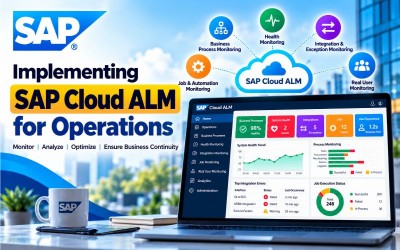
    • SAP Cloud ALM
    • Implementation Dashboards
    • Project Monitoring
    • Guided Configuration
    • Testing
    • Project Tracking
    • Reporting
    • Implementation Tools

  • Lesson 01 00:00:00
    Module 3 Overview

    Procurement Master Data provides the essential foundation for all sourcing and purchasing activities within SAP S/4HANA Cloud Private Edition. Well-maintained master data enables organizations to automate procurement processes, improve supplier collaboration, ensure accurate pricing, optimize purchasing decisions, and streamline procurement operations across the enterprise.

    This module introduces the key procurement master data objects required for successful procurement implementations, including Material Master, Business Partner (Supplier), Purchasing Info Records, Source Lists, Quota Arrangements, and Outline Agreements. Participants will learn how these master data objects interact to support purchasing, sourcing, inventory management, and supplier management.

    By the end of this module, learners will be able to configure and maintain procurement master data required for SAP Sourcing & Procurement implementations.

    According to the SAP Learning Journey, this module covers procurement master data, supplier management, purchasing information records, source determination, and procurement master data configuration.

    What You Will Learn

    • Configure procurement master data.
    • Create Material Master records.
    • Manage Business Partner (Supplier) master data.
    • Configure Purchasing Info Records.
    • Maintain Source Lists.
    • Configure Quota Arrangements.
    • Create Outline Agreements.

    Units in This Module

    • Unit 3.1: Configuring Material Master
    • Unit 3.2: Managing Business Partner (Supplier) Master Data
    • Unit 3.3: Configuring Purchasing Info Records
    • Unit 3.4: Maintaining Source Lists
    • Unit 3.5: Configuring Quota Arrangements
    • Unit 3.6: Managing Outline Agreements
  • Lesson 02 00:00:00
    3.1 Configuring Material Master

    The Material Master contains all information required to manage materials throughout the procurement lifecycle. It supports purchasing, inventory management, planning, valuation, and accounting processes while serving as the central repository for material-related information.

    This unit introduces Material Master structure, procurement views, purchasing data, valuation data, inventory settings, and procurement planning.

    Key Topics

    • Material Master
    • Material Types
    • Purchasing Views
    • Valuation Data
    • Procurement Data
    • Inventory Data
    • Material Planning
    • SAP Master Data
  • Lesson 03 00:00:00
    3.2 Managing Business Partner (Supplier) Master Data

    Business Partner serves as the unified master data object for suppliers within SAP S/4HANA. Supplier master records contain purchasing, financial, contact, payment, and communication information required to support procurement transactions.

    This unit explains supplier creation, supplier roles, purchasing organization data, company code assignments, payment terms, and supplier maintenance.

    Key Topics

    • Business Partner
    • Supplier Master
    • Purchasing Organization Data
    • Company Code Assignment
    • Payment Terms
    • Supplier Roles
    • Vendor Management
    • SAP Business Partner
  • Lesson 04 00:00:00
    3.3 Configuring Purchasing Info Records

    Purchasing Info Records store procurement-specific information for a combination of supplier and material. They include pricing conditions, delivery schedules, lead times, order quantities, and purchasing history that support efficient purchasing operations.

    This unit introduces Info Record creation, pricing conditions, delivery data, purchasing history, and procurement optimization.

    Key Topics

    • Purchasing Info Record
    • Purchasing Conditions
    • Delivery Schedule
    • Lead Time
    • Pricing Information
    • Procurement Data
    • Purchasing History
    • SAP Purchasing
  • Lesson 05 00:00:00
    3.4 Maintaining Source Lists

    Source Lists define approved suppliers for specific materials and control source determination during purchasing. They ensure procurement policies are followed while supporting automated supplier selection.

    This unit explains Source List creation, validity periods, source determination, supplier approval, and procurement control.

    Key Topics

    • Source List
    • Source Determination
    • Approved Suppliers
    • Validity Period
    • Procurement Control
    • Supplier Selection
    • Purchasing Sources
    • SAP MM
  • Lesson 06 00:00:00
    3.5 Configuring Quota Arrangements

    Quota Arrangements distribute procurement requirements among multiple suppliers according to predefined percentages or quotas. This improves supplier collaboration, procurement flexibility, and supply continuity.

    This unit introduces quota calculation, supplier allocation, quota determination, procurement balancing, and purchasing optimization.

    Key Topics

    • Quota Arrangement
    • Supplier Allocation
    • Quota Calculation
    • Procurement Distribution
    • Source Determination
    • Purchasing Optimization
    • Supplier Planning
    • SAP Procurement
  • Lesson 07 00:00:00
    3.6 Managing Outline Agreements

    Outline Agreements establish long-term purchasing relationships with suppliers through contracts and scheduling agreements. They simplify recurring procurement while improving pricing consistency and supplier collaboration.

    This unit explains contracts, scheduling agreements, release orders, pricing agreements, and procurement automation.

    Key Topics

    • Outline Agreements
    • Purchasing Contracts
    • Scheduling Agreements
    • Release Orders
    • Procurement Contracts
    • Long-Term Procurement
    • Supplier Agreements
    • SAP MM

  • Lesson 01 00:00:00
    Module 4 Overview

    Purchasing Processes form the operational core of SAP S/4HANA Sourcing & Procurement. These processes manage the complete purchasing lifecycle from purchase requisition creation through purchase order processing, goods receipt, service procurement, subcontracting, stock transport orders, and procurement monitoring.

    This module introduces end-to-end purchasing execution, procurement document processing, procurement automation, approvals, and purchasing optimization. Learners will gain practical knowledge of purchasing workflows and procurement execution using SAP Fiori applications.

    By the end of this module, participants will be able to efficiently execute purchasing processes and manage procurement transactions across enterprise environments.

    According to the SAP Learning Journey, this module covers purchasing processes, purchase requisitions, purchase orders, subcontracting, stock transport orders, service procurement, and purchasing execution.

    What You Will Learn

    • Create Purchase Requisitions.
    • Process Purchase Orders.
    • Execute Service Procurement.
    • Manage Subcontracting Procurement.
    • Process Stock Transport Orders.
    • Perform Goods Receipt.
    • Monitor Purchasing Activities.

    Units in This Module

    • Unit 4.1: Creating Purchase Requisitions
    • Unit 4.2: Processing Purchase Orders
    • Unit 4.3: Executing Service Procurement
    • Unit 4.4: Managing Subcontracting Procurement
    • Unit 4.5: Processing Stock Transport Orders
    • Unit 4.6: Performing Goods Receipt
    • Unit 4.7: Monitoring Purchasing Activities
  • Lesson 02 00:00:00
    4.1 Creating Purchase Requisitions

    Purchase Requisitions represent internal requests for procuring materials or services. They initiate the purchasing process and support procurement planning, approvals, and sourcing activities.

    Key Topics

    • Purchase Requisition
    • Internal Procurement
    • Procurement Requests
    • Approval Workflow
    • Material Requests
    • SAP Fiori
    • Purchasing Process
    • SAP MM
  • Lesson 03 00:00:00
    4.2 Processing Purchase Orders

    Purchase Orders are legally binding procurement documents issued to suppliers for purchasing materials and services. They define quantities, pricing, delivery dates, payment terms, and procurement conditions.

    Key Topics

    • Purchase Order
    • Purchasing Documents
    • Supplier Orders
    • Pricing Conditions
    • Delivery Dates
    • Procurement Execution
    • Purchasing Workflow
    • SAP Purchasing
  • Lesson 04 00:00:00
    4.3 Executing Service Procurement

    Service Procurement manages the purchasing of external services such as consulting, maintenance, transportation, and professional services. It supports service entry sheets, approvals, and invoice verification.

    Key Topics

    • Service Procurement
    • Service Entry Sheet
    • External Services
    • Service Acceptance
    • Procurement Services
    • Service Purchasing
    • SAP Services
    • SAP MM
  • Lesson 05 00:00:00
    4.4 Managing Subcontracting Procurement

    Subcontracting Procurement enables organizations to supply components to external vendors who manufacture finished or semi-finished products on behalf of the company.

    Key Topics

    • Subcontracting
    • Component Supply
    • Vendor Manufacturing
    • Procurement Processing
    • Material Consumption
    • Procurement Workflow
    • External Manufacturing
    • SAP Procurement
  • Lesson 06 00:00:00
    4.5 Processing Stock Transport Orders

    Stock Transport Orders facilitate inventory transfers between plants and storage locations within an organization while maintaining inventory visibility and procurement control.

    Key Topics

    • Stock Transport Orders
    • Plant Transfers
    • Inventory Transfers
    • Internal Procurement
    • Logistics Execution
    • Material Movement
    • SAP Inventory
    • SAP MM
  • Lesson 07 00:00:00
    4.6 Performing Goods Receipt

    Goods Receipt records the physical receipt of purchased materials and updates inventory, accounting, and procurement documents. It verifies procurement completion and inventory availability.

    Key Topics

    • Goods Receipt
    • Inventory Update
    • Material Receipt
    • Procurement Completion
    • Warehouse Integration
    • Inventory Management
    • SAP Goods Movement
    • SAP MM
  • Lesson 08 00:00:00
    4.7 Monitoring Purchasing Activities

    Purchasing Monitoring provides procurement professionals with visibility into purchasing performance, document status, supplier performance, procurement efficiency, and purchasing analytics.

    Key Topics

    • Purchasing Monitoring
    • Procurement Dashboard
    • Purchasing KPIs
    • Supplier Performance
    • Procurement Analytics
    • Purchasing Reports
    • SAP Fiori Analytics
    • Embedded Analytics

  • Lesson 01 00:00:00
    Module 5 Overview

    Inventory Management and Consumption-Based Planning ensure that organizations maintain optimal inventory levels while meeting operational demand. SAP S/4HANA Cloud Private Edition provides comprehensive inventory management capabilities that enable organizations to track material movements, optimize stock levels, automate replenishment, perform physical inventory, and forecast future material requirements.

    Consumption-Based Planning supports automatic procurement based on historical consumption patterns, reorder points, and forecasting techniques, helping businesses reduce inventory costs while maintaining material availability.

    This module introduces inventory management, goods movements, physical inventory, consumption-based planning, forecasting, reorder point planning, and inventory optimization techniques used in SAP S/4HANA Sourcing & Procurement.

    By the end of this module, participants will be able to efficiently manage inventory operations and automate procurement planning using SAP S/4HANA Cloud Private Edition.

    According to the SAP Learning Journey, this module covers Inventory Management, Consumption-Based Planning, Forecasting, Physical Inventory, Goods Movements, and Inventory Optimization.

    What You Will Learn

    • Manage inventory transactions.
    • Execute goods movements.
    • Perform physical inventory.
    • Configure consumption-based planning.
    • Execute forecasting.
    • Configure reorder point planning.
    • Optimize inventory levels.

    Units in This Module

    • Unit 5.1: Understanding Inventory Management
    • Unit 5.2: Executing Goods Movements
    • Unit 5.3: Performing Physical Inventory
    • Unit 5.4: Configuring Consumption-Based Planning
    • Unit 5.5: Executing Forecasting
    • Unit 5.6: Configuring Reorder Point Planning
    • Unit 5.7: Optimizing Inventory Levels
  • Lesson 02 00:00:00
    5.1 Understanding Inventory Management

    Inventory Management controls material quantities, stock valuation, and inventory movements throughout the procurement lifecycle. It ensures accurate inventory records while supporting procurement, warehouse management, manufacturing, and finance integration.

    This unit introduces inventory management concepts, stock types, inventory transactions, and stock monitoring.

    Key Topics

    • Inventory Management
    • Stock Types
    • Material Stock
    • Inventory Control
    • Stock Monitoring
    • Inventory Valuation
    • SAP Inventory
    • SAP MM
  • Lesson 03 00:00:00
    5.2 Executing Goods Movements

    Goods Movements record material receipts, issues, transfers, and inventory adjustments. These transactions ensure accurate inventory balances while supporting procurement, warehouse operations, and financial accounting.

    This unit explains goods receipts, goods issues, transfer postings, stock transfers, and inventory updates.

    Key Topics

    • Goods Receipt
    • Goods Issue
    • Transfer Posting
    • Stock Transfer
    • Material Movement
    • Inventory Transactions
    • Warehouse Integration
    • SAP Goods Movement
  • Lesson 04 00:00:00
    5.3 Performing Physical Inventory

    Physical Inventory verifies actual warehouse stock against system records to ensure inventory accuracy. SAP supports multiple inventory counting methods, discrepancy analysis, recount processing, and inventory adjustments.

    This unit introduces inventory counting, cycle counting, inventory differences, recount procedures, and inventory reconciliation.

    Key Topics

    • Physical Inventory
    • Cycle Counting
    • Inventory Counting
    • Inventory Differences
    • Inventory Reconciliation
    • Stock Verification
    • Warehouse Inventory
    • SAP Inventory
  • Lesson 05 00:00:00
    5.4 Configuring Consumption-Based Planning

    Consumption-Based Planning automatically plans procurement requirements using historical material consumption rather than dependent production demand. It simplifies inventory planning for frequently consumed materials and operational supplies.

    This unit explains planning procedures, consumption analysis, automatic replenishment, planning parameters, and procurement automation.

    Key Topics

    • Consumption-Based Planning
    • Automatic Replenishment
    • Consumption Analysis
    • Planning Procedures
    • Material Planning
    • Procurement Planning
    • Inventory Planning
    • SAP MRP
  • Lesson 06 00:00:00
    5.5 Executing Forecasting

    Forecasting predicts future material requirements using historical consumption patterns, seasonal trends, and statistical analysis. Accurate forecasting improves procurement planning and reduces inventory shortages.

    This unit introduces forecasting models, historical analysis, demand prediction, forecasting parameters, and planning accuracy.

    Key Topics

    • Forecasting
    • Demand Forecast
    • Consumption History
    • Statistical Forecast
    • Material Planning
    • Inventory Forecast
    • Procurement Forecast
    • SAP Forecasting
  • Lesson 07 00:00:00
    5.6 Configuring Reorder Point Planning

    Reorder Point Planning automatically generates procurement proposals when inventory levels fall below predefined reorder points. This planning method ensures continuous material availability while minimizing manual intervention.

    This unit explains reorder point calculation, safety stock, replenishment planning, planning parameters, and automatic procurement.

    Key Topics

    • Reorder Point Planning
    • Safety Stock
    • Replenishment
    • Inventory Threshold
    • Automatic Procurement
    • Planning Parameters
    • Material Availability
    • SAP Planning
  • Lesson 08 00:00:00
    5.7 Optimizing Inventory Levels

    Inventory Optimization helps organizations balance inventory investment with service levels by reducing excess stock, minimizing shortages, improving turnover, and increasing procurement efficiency.

    This unit introduces inventory optimization strategies, KPIs, stock analysis, inventory performance, and continuous improvement techniques.

    Key Topics

    • Inventory Optimization
    • Inventory KPIs
    • Stock Analysis
    • Inventory Turnover
    • Procurement Efficiency
    • Continuous Improvement
    • Inventory Performance
    • SAP Analytics

  • Lesson 01 00:00:00
    Module 6 Overview

    Logistics Invoice Verification (LIV) is a critical procurement process that validates supplier invoices against purchase orders and goods receipts before payment is processed. SAP S/4HANA Cloud Private Edition automates invoice verification to improve financial accuracy, ensure procurement compliance, and streamline accounts payable processes.

    This module introduces invoice verification concepts, three-way matching, invoice processing, credit memos, subsequent debits and credits, blocked invoices, and invoice correction procedures.

    By the end of this module, participants will be able to process supplier invoices accurately while integrating procurement and finance processes.

    According to the SAP Learning Journey, this module covers Logistics Invoice Verification, invoice processing, invoice corrections, credit memos, blocked invoices, and invoice verification procedures.

    What You Will Learn

    • Understand Logistics Invoice Verification.
    • Process supplier invoices.
    • Perform three-way matching.
    • Process credit memos.
    • Manage invoice blocks.
    • Correct invoice discrepancies.
    • Integrate procurement with finance.

    Units in This Module

    • Unit 6.1: Understanding Logistics Invoice Verification
    • Unit 6.2: Processing Supplier Invoices
    • Unit 6.3: Performing Three-Way Matching
    • Unit 6.4: Processing Credit Memos and Subsequent Adjustments
    • Unit 6.5: Managing Blocked Invoices
    • Unit 6.6: Correcting Invoice Discrepancies
  • Lesson 02 00:00:00
    6.1 Understanding Logistics Invoice Verification

    Logistics Invoice Verification ensures supplier invoices are validated against purchase orders and goods receipts before payment. It improves procurement accuracy, prevents duplicate payments, and strengthens financial controls.

    Key Topics

    • Logistics Invoice Verification
    • Invoice Processing
    • Invoice Verification
    • Procurement Integration
    • Accounts Payable
    • SAP MM
    • Financial Controls
    • Invoice Workflow
  • Lesson 03 00:00:00
    6.2 Processing Supplier Invoices

    Supplier Invoice Processing records vendor invoices for purchased materials and services while validating pricing, quantities, tax information, and payment terms.

    Key Topics

    • Supplier Invoice
    • Invoice Posting
    • Invoice Processing
    • Vendor Accounting
    • Tax Processing
    • Payment Terms
    • Procurement Documents
    • SAP Finance
  • Lesson 04 00:00:00
    6.3 Performing Three-Way Matching

    Three-Way Matching compares the Purchase Order, Goods Receipt, and Supplier Invoice to ensure procurement accuracy before payment authorization.

    Key Topics

    • Three-Way Matching
    • Purchase Order
    • Goods Receipt
    • Invoice Verification
    • Procurement Validation
    • Invoice Accuracy
    • SAP MM
    • Procurement Controls
  • Lesson 05 00:00:00
    6.4 Processing Credit Memos and Subsequent Adjustments

    Credit Memos and Subsequent Debits or Credits enable organizations to process supplier price corrections, returns, invoice adjustments, and procurement reconciliations.

    Key Topics

    • Credit Memo
    • Subsequent Debit
    • Subsequent Credit
    • Invoice Adjustment
    • Procurement Corrections
    • Vendor Settlement
    • SAP Invoice Processing
    • Financial Adjustments
  • Lesson 06 00:00:00
    6.5 Managing Blocked Invoices

    Invoice Blocking prevents incorrect invoices from being paid until procurement discrepancies are resolved. SAP automatically blocks invoices based on predefined tolerance limits and validation rules.

    Key Topics

    • Blocked Invoice
    • Invoice Tolerances
    • Payment Block
    • Invoice Validation
    • Procurement Controls
    • Exception Processing
    • Invoice Review
    • SAP MM
  • Lesson 07 00:00:00
    6.6 Correcting Invoice Discrepancies

    Invoice Discrepancy Resolution enables procurement and finance teams to investigate pricing, quantity, tax, and delivery differences before releasing invoices for payment.

    Key Topics

    • Invoice Discrepancies
    • Price Differences
    • Quantity Variance
    • Tax Adjustments
    • Invoice Corrections
    • Exception Resolution
    • Procurement Compliance
    • SAP Finance

  • Lesson 01 00:00:00
    Module 7 Overview

    Materials Management (MM) Configuration provides the foundation for procurement, inventory management, material valuation, purchasing, and logistics execution within SAP S/4HANA Cloud Private Edition. Proper configuration enables organizations to standardize procurement processes, automate purchasing activities, optimize inventory management, and ensure seamless integration with Finance, Warehouse Management, Manufacturing, and Sales.

    This module introduces enterprise structure configuration, purchasing configuration, inventory management settings, material valuation, account determination, output management, and system integration required for SAP Materials Management implementations.

    By the end of this module, participants will be able to configure the core Materials Management settings required for enterprise procurement operations.

    According to the SAP Learning Journey, this module covers Materials Management customization, purchasing configuration, inventory management configuration, valuation, account determination, and integration settings.

    What You Will Learn

    • Configure the MM enterprise structure.
    • Configure purchasing settings.
    • Configure inventory management.
    • Configure material valuation.
    • Configure account determination.
    • Configure output management.
    • Integrate Materials Management with other SAP modules.

    Units in This Module

    • Unit 7.1: Configuring Enterprise Structure
    • Unit 7.2: Configuring Purchasing
    • Unit 7.3: Configuring Inventory Management
    • Unit 7.4: Configuring Material Valuation
    • Unit 7.5: Configuring Account Determination
    • Unit 7.6: Configuring Output Management
    • Unit 7.7: Integrating Materials Management
  • Lesson 02 00:00:00
    7.1 Configuring Enterprise Structure

    Enterprise Structure defines the organizational framework required for procurement and inventory management. Proper organizational assignments ensure purchasing transactions are executed correctly across company codes, plants, storage locations, and purchasing organizations.

    Key Topics

    • Enterprise Structure
    • Company Code
    • Plant
    • Storage Location
    • Purchasing Organization
    • Purchasing Group
    • Organizational Assignment
    • SAP MM Configuration
  • Lesson 03 00:00:00
    7.2 Configuring Purchasing

    Purchasing Configuration controls procurement document processing, purchasing groups, document types, release strategies, pricing procedures, and procurement workflows.

    This unit explains purchasing customization required for efficient procurement execution.

    Key Topics

    • Purchasing Configuration
    • Document Types
    • Release Strategy
    • Pricing Procedure
    • Purchasing Groups
    • Purchase Orders
    • Procurement Workflow
    • SAP Purchasing
  • Lesson 04 00:00:00
    7.3 Configuring Inventory Management

    Inventory Management Configuration controls goods movements, stock types, movement types, inventory updates, stock determination, and warehouse integration within SAP S/4HANA.

    This unit introduces inventory customization, movement types, stock determination, and inventory transaction configuration.

    Key Topics

    • Inventory Management
    • Movement Types
    • Stock Types
    • Inventory Transactions
    • Goods Movements
    • Stock Determination
    • Warehouse Integration
    • SAP Inventory
  • Lesson 05 00:00:00
    7.4 Configuring Material Valuation

    Material Valuation determines how inventory is valued for financial reporting. SAP supports multiple valuation methods including moving average price and standard price while integrating inventory transactions with Financial Accounting.

    This unit explains valuation areas, valuation classes, price control, and inventory valuation methods.

    Key Topics

    • Material Valuation
    • Valuation Area
    • Valuation Class
    • Price Control
    • Standard Price
    • Moving Average Price
    • Inventory Valuation
    • SAP FI Integration
  • Lesson 06 00:00:00
    7.5 Configuring Account Determination

    Account Determination automatically posts inventory and procurement transactions to the correct General Ledger accounts. Proper account determination ensures accurate financial reporting and integration between Materials Management and Financial Accounting.

    This unit introduces automatic account determination, valuation grouping, transaction keys, and financial integration.

    Key Topics

    • Account Determination
    • Automatic Posting
    • General Ledger
    • Transaction Keys
    • Valuation Grouping
    • Financial Integration
    • SAP FI
    • MM Integration
  • Lesson 07 00:00:00
    7.6 Configuring Output Management

    Output Management controls how procurement documents such as Purchase Orders, Requests for Quotation, Contracts, and Scheduling Agreements are generated, printed, emailed, or electronically transmitted to suppliers.

    This unit explains output determination, business rules, document generation, email communication, and output configuration.

    Key Topics

    • Output Management
    • Output Determination
    • Purchase Order Output
    • Email Communication
    • Print Forms
    • Business Rules
    • Document Output
    • SAP Output Management
  • Lesson 08 00:00:00
    7.7 Integrating Materials Management

    Materials Management integrates with Financial Accounting, Sales, Warehouse Management, Production Planning, Quality Management, and Supplier Management to support end-to-end procurement operations.

    This unit introduces cross-module integration, business process flows, document integration, and enterprise data consistency.

    Key Topics

    • MM Integration
    • Financial Accounting
    • Warehouse Management
    • Production Planning
    • Sales Integration
    • Quality Management
    • Business Processes
    • SAP Integration

  • Lesson 01 00:00:00
    Module 8 Overview

    Implementing SAP S/4HANA Cloud Private Edition Sourcing & Procurement requires a structured methodology that combines SAP Activate, SAP Best Practices, guided configuration, agile project delivery, and RISE with SAP. These implementation approaches accelerate deployment while reducing project risk and ensuring business process standardization.

    This module introduces the complete procurement implementation lifecycle, including project preparation, business process analysis, system configuration, testing, deployment, and post-go-live support. Participants will also learn how SAP Cloud ALM and SAP Best Practices support successful procurement transformation projects.

    By the end of this module, learners will understand how to participate in real-world SAP Sourcing & Procurement implementation projects using SAP Activate and RISE with SAP.

    According to the SAP Learning Journey, this module covers SAP Activate methodology, RISE with SAP, implementation tools, SAP Best Practices, project governance, testing, deployment, and go-live activities.

    What You Will Learn

    • Understand SAP Activate implementation methodology.
    • Apply SAP Best Practices.
    • Configure procurement solutions using guided configuration.
    • Execute procurement testing.
    • Support deployment and go-live activities.
    • Use SAP Cloud ALM.
    • Participate in enterprise procurement implementation projects.

    Units in This Module

    • Unit 8.1: Understanding SAP Activate Implementation
    • Unit 8.2: Working with SAP Best Practices
    • Unit 8.3: Performing Testing, Deployment, and Go-Live
  • Lesson 02 00:00:00
    8.1 Understanding SAP Activate Implementation

    SAP Activate provides a standardized implementation methodology that combines SAP Best Practices, guided configuration, agile project management, and implementation accelerators for successful SAP S/4HANA Procurement deployments.

    Key Topics

    • SAP Activate
    • Agile Methodology
    • SAP Best Practices
    • Guided Configuration
    • Project Phases
    • Implementation Lifecycle
    • SAP S/4HANA
    • Enterprise Implementation
  • Lesson 03 00:00:00
    8.2 Working with SAP Best Practices

    SAP Best Practices provide preconfigured business processes that accelerate procurement implementation while reducing customization and implementation time.

    Key Topics

    • SAP Best Practices
    • Procurement Processes
    • Standard Configuration
    • Business Scenarios
    • Process Templates
    • SAP Content
    • Configuration Guides
    • SAP Sourcing
  • Lesson 04 00:00:00
    8.3 Performing Testing, Deployment, and Go-Live

    Testing and deployment validate procurement processes before production deployment. Go-live activities ensure business continuity and successful adoption of SAP S/4HANA Procurement.

    Key Topics

    • Unit Testing
    • Integration Testing
    • User Acceptance Testing
    • Deployment
    • Go-Live
    • Hypercare
    • SAP Cloud ALM
    • Project Support

  • Lesson 01 00:00:00
    Practical Exercises

    Throughout this course, learners will complete a series of hands-on exercises that simulate real-world procurement implementation scenarios in SAP S/4HANA Cloud Private Edition.

    These practical activities reinforce the concepts covered throughout the course and prepare learners for enterprise implementation projects.

    Participants will perform the following exercises:

    • Configure Procurement Organizational Structure
    • Configure Company Codes, Plants, and Storage Locations
    • Create Material Master Records
    • Create Business Partner (Supplier) Master Data
    • Configure Purchasing Organizations and Purchasing Groups
    • Create Purchasing Info Records
    • Configure Source Lists and Quota Arrangements
    • Create Purchase Requisitions
    • Process Requests for Quotation (RFQ)
    • Create Purchase Orders
    • Process Service Procurement
    • Configure and Execute Subcontracting
    • Process Stock Transport Orders
    • Perform Goods Receipt
    • Execute Inventory Transfers
    • Perform Physical Inventory
    • Configure Consumption-Based Planning
    • Execute Forecasting
    • Configure Reorder Point Planning
    • Process Supplier Invoices
    • Perform Three-Way Matching
    • Process Credit Memos
    • Resolve Invoice Blocks
    • Configure Materials Management Settings
    • Configure Account Determination
    • Configure Output Management
    • Execute Procurement Reporting using SAP Fiori
    • Perform End-to-End Procurement Cycle
    • Test Procurement Business Processes
    • Prepare Go-Live Readiness Activities
  • Lesson 02 00:00:00
    Real-World Enterprise Procurement Implementation Project

    Enterprise Procurement Transformation using SAP S/4HANA Cloud Private Edition

    As part of this course, learners will complete a comprehensive enterprise procurement implementation project based on a real-world business scenario.

    The project simulates the implementation of SAP S/4HANA Cloud Private Edition – Sourcing & Procurement for a multinational organization migrating from legacy procurement systems to SAP's intelligent procurement platform.

    Participants will implement procurement master data, purchasing processes, inventory management, supplier management, logistics invoice verification, materials management configuration, SAP Fiori procurement applications, and SAP Activate implementation methodology using SAP Best Practices.

    The project reflects real consulting engagements and provides practical experience across the complete SAP Procurement implementation lifecycle.

    Business Scenario

    A global manufacturing and distribution company operates multiple production facilities, warehouses, and procurement centers across different countries. The organization plans to replace its legacy procurement system with SAP S/4HANA Cloud Private Edition to standardize purchasing operations, improve supplier collaboration, optimize inventory management, and automate procurement workflows.

    The company requires an integrated procurement solution capable of supporting:

    • Enterprise-wide procurement standardization
    • Centralized supplier management
    • Strategic sourcing and purchasing
    • Automated procurement workflows
    • Inventory optimization
    • Consumption-based planning
    • Logistics Invoice Verification
    • Financial integration
    • Procurement analytics and reporting
    • Cloud-based digital procurement transformation

    The SAP implementation team is responsible for configuring and deploying the complete Sourcing & Procurement solution using SAP Activate and SAP Best Practices.

    Project Deliverables

    By the end of this implementation project, learners will successfully configure and demonstrate:

    Organizational Structure

    • Company Code Configuration
    • Plant Configuration
    • Storage Location Configuration
    • Purchasing Organization Configuration
    • Purchasing Group Configuration

    Master Data Configuration

    • Material Master
    • Business Partner (Supplier)
    • Purchasing Info Records
    • Source Lists
    • Quota Arrangements
    • Outline Agreements

    Procurement Processing

    • Purchase Requisitions
    • Requests for Quotation (RFQ)
    • Purchase Orders
    • Service Procurement
    • Subcontracting
    • Stock Transport Orders

    Inventory Management

    • Goods Receipts
    • Goods Issues
    • Inventory Transfers
    • Physical Inventory
    • Inventory Monitoring

    Procurement Planning

    • Consumption-Based Planning
    • Forecasting
    • Reorder Point Planning
    • Inventory Optimization

    Financial Integration

    • Logistics Invoice Verification
    • Three-Way Matching
    • Credit Memos
    • Invoice Blocking
    • Invoice Corrections
    • Account Determination

    Materials Management Configuration

    • Purchasing Configuration
    • Inventory Management Configuration
    • Material Valuation
    • Output Management
    • MM Integration

    SAP Activate Project Activities

    • Discover Phase
    • Prepare Phase
    • Explore Phase
    • Realize Phase
    • Deploy Phase
    • Run Phase

    Reporting & Analytics

    • Procurement Dashboards
    • Spend Analysis
    • Supplier Performance Reports
    • Procurement KPIs
    • SAP Fiori Analytics

    Project Outcome

    Upon successful completion of this project, learners will be able to participate in enterprise SAP Sourcing & Procurement implementation and support projects.

    Participants will gain practical experience in:

    • SAP Procurement Configuration
    • Procurement Business Process Design
    • Purchasing Process Automation
    • Supplier Management
    • Inventory Management
    • Consumption-Based Planning
    • Logistics Invoice Verification
    • Materials Management Configuration
    • SAP Activate Project Execution
    • SAP Fiori Procurement Applications
    • Enterprise Procurement Transformation

    This implementation project closely reflects the responsibilities of SAP MM Functional Consultants and SAP Procurement Consultants working on real-world SAP S/4HANA Cloud Private Edition deployments.

Jittesh Purrohit

Lectures

57

Skill level

Intermediate

Expiry period

Lifetime

Related courses