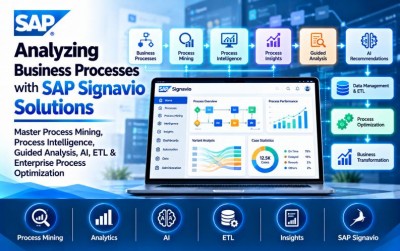
Analyzing Business Processes with SAP Signavio Solutions
Master SAP Signavio Process Intelligence, Process Mining, Process Insights, Data Management, ETL, SiGNAL, AI Capabilities, and Business Process Analysis.
English
Last updated
Sat, 24-Oct-2026
Master SAP Signavio Process Intelligence, Process Mining, Process Insights, Data Management, ETL, SiGNAL, AI Capabilities, and Business Process Analysis.
English
Last updated
Sat, 24-Oct-2026
Analyzing Business Processes with SAP Signavio Solutions is a comprehensive professional training program designed for Business Analysts, Process Analysts, SAP Consultants, Business Process Managers, Digital Transformation Professionals, SAP Signavio Consultants, Process Improvement Specialists, and SAP certification candidates.
This learning journey provides complete coverage of SAP Signavio solutions for business process analysis. Learners will explore Business Process Management (BPM), Process Collaboration Hub, Process Mining, Process Intelligence, Data Management, ETL, SiGNAL, Process Insights, Guided Analysis, Artificial Intelligence capabilities, and the SAP Signavio Plug & Gain approach for business process transformation.
Business process analysis is essential for organizations seeking operational excellence, digital transformation, and continuous process improvement. SAP Signavio Solutions provide intelligent capabilities that enable organizations to discover, analyze, monitor, optimize, and automate business processes using real operational data.
This course covers the complete SAP Signavio business process analysis lifecycle—from understanding business process fundamentals and process mining to guided analysis, process intelligence, ETL, AI-powered insights, and Plug & Gain implementation.
By the end of this course, learners will be able to analyze enterprise processes, identify bottlenecks, improve operational efficiency, and support SAP transformation initiatives using SAP Signavio Solutions.
This module introduces SAP Signavio Solutions for analyzing business processes. Learners will explore business process management, process collaboration, process mining, process intelligence, data management, ETL, SiGNAL, Process Insights, guided analysis, and AI capabilities for identifying process inefficiencies and supporting operational excellence.
This unit introduces the fundamentals of business processes and explains how organizations document, manage, monitor, and continuously improve operational workflows. Learners will understand the importance of standardized processes and their role in digital transformation initiatives.
This unit explains Business Process Management (BPM), including process governance, process improvement methodologies, process optimization strategies, and continuous business process management practices.
This unit introduces SAP Signavio Process Collaboration Hub, enabling organizations to collaborate on process documentation, share process knowledge, improve communication, and maintain enterprise-wide process transparency.
This unit introduces Process Mining and demonstrates how organizations analyze event logs and operational data to discover actual business process execution, identify bottlenecks, and improve operational efficiency.
This unit focuses on SAP Signavio Process Intelligence, enabling analysts to monitor business processes, analyze performance metrics, visualize process flows, and identify opportunities for optimization using enterprise operational data.
This unit explains data management concepts, Extract-Transform-Load (ETL) processes, data preparation, integration, and cleansing techniques required for accurate business process analysis within SAP Signavio Process Intelligence.
This unit introduces SiGNAL, enabling users to perform advanced process analysis, identify trends, evaluate business events, and generate actionable insights from enterprise process data.
This unit explains SAP Signavio Process Insights and demonstrates how organizations analyze operational performance, monitor process KPIs, identify inefficiencies, and prioritize improvement opportunities.
This unit focuses on Guided Analysis techniques that help business users investigate process performance, diagnose bottlenecks, evaluate root causes, and implement continuous process improvements using SAP Signavio Process Insights.
This unit introduces Artificial Intelligence capabilities available in SAP Signavio solutions and explains how AI enhances business process analysis, intelligent recommendations, process optimization, and operational decision-making.
This module introduces the SAP Signavio Plug & Gain approach and explains how it supports rapid process transformation through predefined content, KPIs, dashboards, process diagrams, solution provisioning, customization, and SAP S/4HANA transformation support.
This unit introduces the SAP Signavio Plug & Gain approach, explaining its purpose, architecture, predefined content, business benefits, and role in accelerating enterprise process transformation projects.
This unit explains solution provisioning and the installation of SAP Signavio Plug & Gain content, enabling organizations to rapidly deploy predefined process assets, dashboards, and analytical content.
This unit explains how organizations use SAP Signavio Plug & Gain to accelerate business process transformation through predefined content, process models, dashboards, KPIs, and implementation best practices. Learners will understand how to maximize business value while reducing implementation effort.
This unit introduces the primary business use cases of SAP Signavio Plug & Gain, including process harmonization, operational efficiency, process automation, and SAP S/4HANA transformation support. Learners will understand how predefined content accelerates enterprise transformation initiatives.
Throughout this course, learners will complete practical exercises using SAP Signavio Solutions to analyze, monitor, optimize, and transform enterprise business processes.
Participants will perform the following exercises:
In this capstone project, learners will implement a complete SAP Signavio business process analysis initiative for a fictional enterprise undergoing digital transformation.
The project simulates a real-world business process improvement engagement, enabling learners to discover process inefficiencies, analyze operational data, optimize workflows, and prepare an SAP S/4HANA transformation roadmap.
Perform:
Implement:
Configure:
Implement:
Upon successful completion of this project, learners will be able to:


Study any topic, anytime. explore thousands of courses for the lowest price ever!