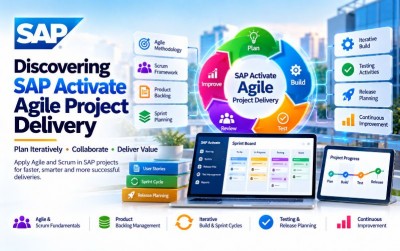
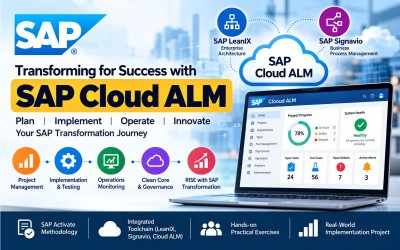
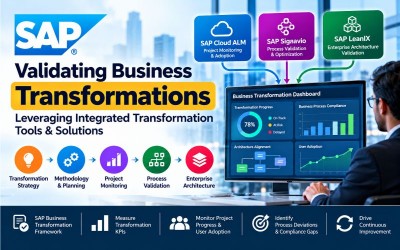
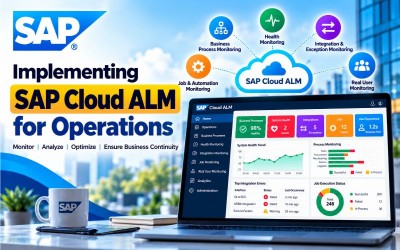
Discovering SAP Activate – Agile Project Delivery is a comprehensive SAP Agile implementation training program designed for SAP Consultants, SAP Project Managers, Scrum Masters, Product Owners, SAP Solution Architects, Functional Consultants, Technical Consultants, SAP Cloud Consultants, Business Analysts, Delivery Managers, PMO Professionals, Agile Coaches, and Digital Transformation Specialists.
This course provides practical knowledge of Agile methodology, Scrum framework, SAP Activate Agile Project Delivery, Sprint Planning, Backlog Management, Iterative Build, Release Planning, Test Activities, Scaled Agile concepts, and enterprise Agile implementation using SAP Activate.
Following SAP's official Learning Journey, learners will understand how to apply Agile and Scrum concepts within SAP implementation projects, establish Agile teams, manage product backlogs, execute sprint cycles, and successfully deliver SAP solutions using iterative development and SAP Activate best practices.
Modern SAP implementations require organizations to deliver business value quickly while maintaining flexibility, quality, and governance. SAP Activate integrates Agile principles and Scrum practices into SAP implementation projects, enabling organizations to deliver ERP solutions through iterative development, continuous collaboration, and incremental releases.
This course introduces Agile Project Delivery within SAP Activate, beginning with Agile fundamentals, Scrum concepts, project startup, Agile team organization, backlog creation, sprint planning, iterative build, release management, testing, and project governance.
Participants will learn how Agile implementation supports SAP S/4HANA Cloud, SAP Business Technology Platform (SAP BTP), RISE with SAP, and enterprise digital transformation initiatives.
By the end of this course, learners will confidently understand how to manage Agile SAP implementation projects, coordinate Scrum teams, execute sprint cycles, and deliver enterprise SAP solutions using SAP Activate methodology.
Who Should Attend
- SAP Consultants
- SAP Functional Consultants
- SAP Technical Consultants
- SAP Project Managers
- Scrum Masters
- Product Owners
- SAP Solution Architects
- SAP Cloud Consultants
- Business Analysts
- Delivery Managers
- Agile Coaches
- PMO Professionals
- ERP Implementation Consultants
- Digital Transformation Consultants
- SAP Implementation Partners
Skills You Will Gain
- SAP Activate Agile Project Delivery
- Agile Methodology
- Scrum Framework
- Product Backlog Management
- Sprint Planning
- Sprint Execution
- Iterative Build
- Release Planning
- Agile Testing
- User Story Management
- Agile Governance
- SAP Project Delivery
- Continuous Improvement
- Enterprise Agile
- SAP Best Practices
Career Opportunities
- SAP Activate Consultant
- SAP Project Manager
- Scrum Master
- Product Owner
- SAP Solution Architect
- SAP Cloud Consultant
- Agile Project Manager
- SAP Delivery Manager
- SAP Functional Consultant
- SAP Technical Consultant
- Agile Transformation Consultant
- ERP Implementation Consultant
- SAP PMO Consultant
- Enterprise Agile Coach
- Digital Transformation Manager
Certification Preparation
This course provides a strong foundation for professionals preparing for SAP Activate, Agile Project Delivery, Scrum, SAP Cloud ERP implementation, and SAP project management certifications.
Participants will gain expertise in:
- Agile Methodology
- Scrum Framework
- SAP Activate Agile Delivery
- Product Backlog
- Sprint Planning
- Iterative Build
- Release Planning
- Agile Testing
- Agile Governance
- Enterprise SAP Project Delivery
The course combines Agile methodology with SAP Activate implementation guidance to prepare learners for enterprise SAP implementation projects using Agile delivery practices.