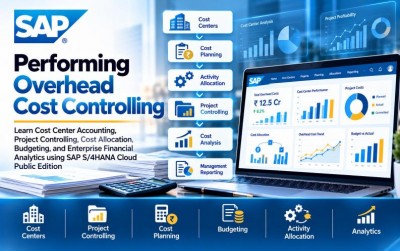
Performing Overhead Cost Controlling is a comprehensive SAP S/4HANA Cloud Public Edition training program designed for finance professionals, SAP Management Accounting (CO) consultants, controllers, ERP implementation teams, cost accountants, and SAP certification candidates who want to master Overhead Cost Controlling processes.
This course provides practical knowledge of Cost Center Accounting, Project Controlling, overhead cost planning, cost allocations, activity allocation, budgeting, statistical key figures, embedded analytics, period-end processing, and management reporting.
Learners will gain hands-on experience configuring Cost Centers, managing master data, planning costs, allocating overhead expenses, controlling project costs, monitoring actual versus planned costs, and generating analytical reports to support management decision-making.
The course prepares participants to confidently participate in SAP S/4HANA Cloud Public Edition implementation projects with a specialization in Overhead Cost Controlling and Management Accounting.
Effective overhead cost controlling is essential for monitoring organizational expenses, improving profitability, supporting budgeting activities, and enabling accurate financial planning. SAP S/4HANA Cloud Public Edition provides integrated Management Accounting capabilities that help organizations plan, allocate, monitor, and analyze overhead costs across cost centers and projects.
This course introduces the complete Overhead Cost Controlling lifecycle, beginning with Management Accounting fundamentals and progressing through Cost Center Accounting, Project Controlling, planning, budgeting, allocations, reporting, and period-end activities.
Learners will understand how to configure enterprise overhead cost processes while integrating Management Accounting with Financial Accounting, Project Management, and Embedded Analytics.
By the end of this course, participants will possess the practical skills required to configure, implement, and manage enterprise Overhead Cost Controlling using SAP S/4HANA Cloud Public Edition.
Overhead Cost Controlling is a key component of SAP Management Accounting that enables organizations to effectively plan, monitor, allocate, and analyze indirect business costs. It provides financial transparency, supports budgeting activities, and helps management make informed business decisions.
This module introduces the architecture of Management Accounting in SAP S/4HANA Cloud Public Edition, the role of Cost Center Accounting, and the differences between Cost Centers and simple projects. Learners will gain a solid understanding of how overhead costs are structured and managed within an enterprise.
By the end of this module, learners will understand the foundation of Overhead Cost Controlling and how it supports enterprise financial planning and reporting.
This unit introduces the core concepts of Overhead Cost Controlling and explains how Management Accounting helps organizations monitor expenses, improve financial transparency, and support strategic business decisions.
Learners will understand the architecture of Management Accounting, the purpose of Cost Center Accounting, and the relationship between Cost Centers and Projects.
Cost Center Accounting enables organizations to monitor operational expenses, allocate indirect costs, analyze departmental performance, and improve financial control. SAP S/4HANA Cloud Public Edition provides integrated tools to manage Cost Centers throughout the planning, execution, reporting, and period-end processes.
This module introduces Cost Center master data, planning activities, activity type pricing, direct activity allocation, statistical key figures, overhead allocation cycles, reporting, event-based postings, and period-end closing.
By the end of this module, learners will be able to configure and manage enterprise Cost Center Accounting processes using SAP S/4HANA Cloud Public Edition.
This unit introduces Cost Center Accounting processes used to monitor, allocate, and analyze operational costs across different organizational departments.
Learners will configure and maintain Cost Center master data, organizational assignments, validity periods, responsible persons, and control parameters required for enterprise cost management.
This unit explains planning activities including cost planning, activity type pricing, budgeting, statistical key figures, and direct activity allocation used to support enterprise financial planning.
This unit focuses on embedded reporting capabilities that help organizations compare planned versus actual costs, monitor department performance, and support management decisions.
Learners will understand event-based postings, cost collection, expense tracking, and real-time financial postings that support accurate Cost Center Accounting.
This unit explains period-end processing activities including allocations, settlements, reconciliations, closing activities, and financial reporting required for accurate Cost Center Accounting.
Project Controlling enables organizations to effectively plan, monitor, budget, allocate, and analyze project-related costs throughout the project lifecycle. SAP S/4HANA Cloud Public Edition provides integrated Project Controlling capabilities that help businesses maintain financial discipline, improve project profitability, and support informed decision-making.
This module introduces Project Controlling fundamentals, including project master data management, project planning, budgeting, direct activity allocation, project analytics, event-based postings, and period-end settlement activities.
By the end of this module, learners will be able to configure and manage Project Controlling processes using SAP S/4HANA Cloud Public Edition.
This unit introduces overhead projects and explains how projects are used to plan, monitor, and control indirect organizational costs. Learners will understand project structures, project lifecycle management, and integration with Management Accounting.
Learners will configure and maintain project master data, organizational assignments, project profiles, responsible personnel, and project control settings required for effective project cost management.
This unit focuses on project planning and budgeting activities, enabling learners to estimate project costs, allocate budgets, monitor spending, and manage financial resources throughout the project lifecycle.
Learners will explore embedded analytics tools that provide real-time visibility into project performance, cost trends, budget utilization, and financial reporting to support strategic decision-making.
This unit explains how event-based postings capture project-related financial transactions in real time. Learners will understand project cost postings, expense tracking, activity allocation, and financial reconciliation.
This unit covers period-end activities for Project Controlling, including settlements, reconciliations, closing activities, project reporting, and financial adjustments required for accurate project accounting.
Throughout this course, learners will complete hands-on implementation exercises using SAP S/4HANA Cloud Public Edition – Overhead Cost Controlling.
Participants will perform the following practical exercises:
In this capstone project, learners will implement a complete Overhead Cost Controlling and Project Controlling solution for a fictional enterprise using SAP S/4HANA Cloud Public Edition.
The project simulates a real SAP implementation where learners configure Cost Centers, allocate overhead costs, manage projects, perform planning and budgeting, and generate management reports for decision-making.
Configure:
Implement:
Configure:
Configure:
(Next continuation will include Expected Project Outcome, Course Completion Summary, Course Includes, What You'll Build During This Course, Next Steps, and the 400 × 250 Course Banner Prompt.)
Upon successful completion of the capstone project, learners will be able to: